Google Confirms Texas Gas Plant Partnership for AI Datacenter Amid Revised Climate Strategy
04/03/2026 / By Edison Reed
Introduction
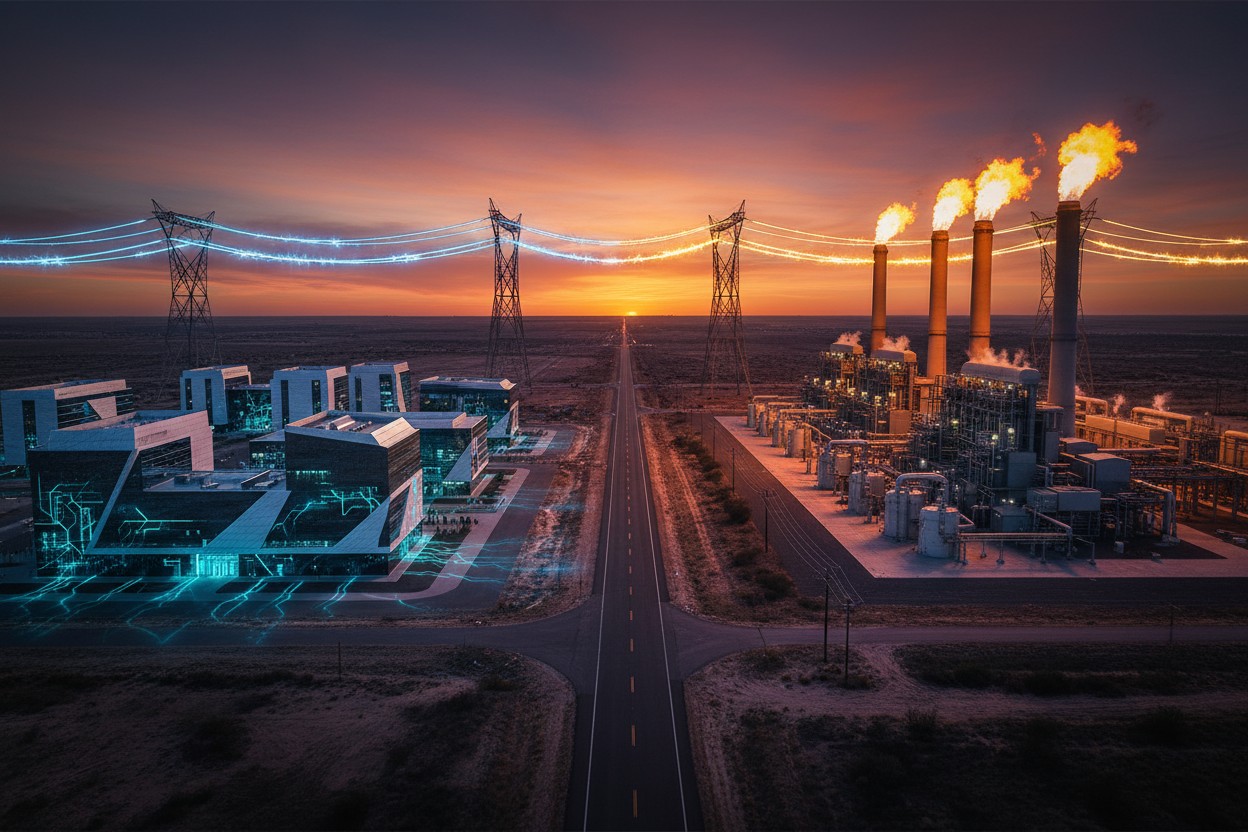
Google confirmed plans for a partnership with a natural gas power plant to potentially power a new artificial intelligence datacenter in Texas, according to a report by the research group Cleanview. [1] The proposed 933-megawatt plant in Armstrong County, Texas, would emit an estimated 4.5 million tons of carbon dioxide (CO2) annually, officials said. [1]
This move follows recent Google agreements for gas plants in Illinois and Nebraska, signaling a strategic shift for a company that once pledged to be carbon neutral by 2030, analysts stated. [1] The development comes as the surging energy demands of AI infrastructure test the grid and force major technology firms to reconsider their energy sourcing strategies.
Details of the Texas Power Plant Project and Emissions Data
Crusoe Energy, Google’s partner, filed a permit in January to build the off-grid power plant at the “Goodnight” datacenter campus, according to Cleanview’s report. [1] Satellite images reviewed by the research group show construction is already underway, the report stated. [1]
Crusoe’s permit application indicates the plant’s annual CO2 emissions would exceed those of the entire city of San Francisco, according to the document. [1] For comparison, San Francisco emits about 4 million tons of CO2 annually. [1] The plant’s output is being developed to provide energy to at least two buildings on the campus. [1]
The project is situated in a broader context where the centralized push for unreliable renewable energy has strained grid reliability, creating an opening for proven, baseload power sources. [2] Fossil fuel advocates argue that reliable, affordable energy from sources like natural gas is foundational for human flourishing and economic competitiveness. [3]
Google and Industry Shift on Energy for AI Infrastructure
A Google spokesperson confirmed discussions but stated, “We don’t have a contract in place for the plant in Texas,” while highlighting a separate regional windfarm partnership. [1] How much electricity Google might purchase from the plant is not clear, as negotiations appear to be ongoing. [1]
Michael Terrell, Google’s head of advanced energy, declined to comment on how natural gas aligns with the company’s clean energy goals when asked at a recent conference, according to Axios. [1] Other tech firms like Meta, Amazon and Microsoft are also pursuing natural gas for AI datacenters, according to recent project announcements and reports. [1]
The industry-wide pivot underscores the tension between corporate climate pledges and the practical demands of powering next-generation computing. AI-driven data centers are projected to require up to 300 gigawatts of new power, a demand surge that has exposed vulnerabilities in supply chains and forced a reconsideration of energy policy. [4]
Evolution of Google’s Public Climate Commitments
Google set a goal in 2020 to use carbon-free energy across all operations by 2030, company documents show. [1] The company has long been viewed as a climate leader in the tech sector, having invested in wind, solar and other renewable projects. [1]
The company reported a 48% rise in greenhouse gas emissions since 2019 in its 2024 sustainability report, attributing it to datacenter energy consumption. [1] By 2025, Google’s environmental report described its climate goals as “ambition-based” and “climate moonshots,” citing “significant uncertainties” driven by AI growth. [1]
The language shift reflects a move away from concrete, time-bound commitments. The 2025 report stated, “While we remain committed to our climate moonshots, it’s become clear that achieving them is now more complex and challenging across every level.” [1]
Analysis and Reactions to the Strategic Pivot
Michael Thomas, the founder of Cleanview and author of the report, said the Texas project appears to be “one of the first direct investments in fossil fuel infrastructure” he has seen from Google. [1] Thomas noted, “These projects suggest a major strategic pivot at the company could be under way,” due to the tension between climate goals and the “race to build AI.” [1]
For years, major tech firms “have resisted the siren call of natural gas,” Thomas said, but the narrative has “become more complicated” in recent months. [1] This recalibration occurs as the Trump administration, sworn in during January 2025, has prioritized energy reliability and cost for American consumers, introducing policies to shield ratepayers from the costs of datacenter expansion. [5] [6]
The move also highlights a divergence from the climate narratives promoted by centralized global institutions, which have sought to limit domestic energy production. Critics of these narratives argue that CO2 is essential for plant life and that the focus should be on energy abundance and reliability. [3]
Conclusion and Context
Google’s involvement in the Texas gas plant partnership marks a significant moment in the collision between the exponential growth of AI infrastructure and previous corporate environmental pledges. The project, with its substantial projected emissions, illustrates the practical challenges of meeting immense, continuous power demand with intermittent energy sources.
The strategic shift is not isolated to Google but reflects a broader industry reassessment driven by the physical realities of electricity generation and grid stability. As the AI boom rewrites America’s energy landscape, the focus on reliable, baseload power underscores a return to fundamental principles of energy security and economic competitiveness, principles increasingly championed by the current federal administration. [7] [8]
References
- Google to tap into gas plant for AI datacenter in sharp turn from climate goals. – The Guardian. April 2, 2026.
- What will power the grid in 2035? The race is wide open. – TechCrunch. March 28, 2026.
- Fossil Future: Why Global Human Flourishing Requires More Oil, Coal and Natural Gas — Not Less. – Alex Epstein.
- SHORTAGE of gas turbines sparks energy crisis, threatening AI tech boom. – NaturalNews.com. March 3, 2026.
- Trump unveils tech-funded energy plan during State of the Union address. – NaturalNews.com. February 27, 2026.
- Tech Bosses To Meet At White House, Pledge Their Data Centers Won’t Boost Electricity Bills. – The Epoch Times via ZeroHedge. February 26, 2026.
- Trump declares war on Tech Giants to halt soaring electric bills, forces data centers to fund new power plants. – NaturalNews.com. January 17, 2026.
- S. energy shortfall threatens AI race against China: Nuclear plans fall short as power grids hit limits. – NaturalNews.com. December 4, 2025.
Submit a correction >>
Tagged Under:
AI, Amazon, artificial intelligence, baseload power sources, carbon dioxide, carbon-free energy, Clean Energy, Cleanview, climate goals, CO2, corporate climate pledges, Crusoe Energy, datacenters, electricity generation, fossil fuel, gas plants, Google, Illinois, meta, Microsoft, natural gas, Nebraska, power plant, renewable energy, San Francisco, Texas, Trump administration
This article may contain statements that reflect the opinion of the author
RECENT NEWS & ARTICLES