Europe’s carbon rules buckle as Volkswagen weighs 100,000 job cuts
07/02/2026 / By Cassie B.

- The EU is holding to its Green Deal targets — a 55% emissions cut by 2030 and net-zero by 2050 — even as its carbon market comes under growing political attack.
- Carbon costs have climbed sharply, from an average €25 per ton in 2020 to over €100 by 2023, adding pressure on European manufacturers.
- Germany, Italy, and Eastern European nations are demanding looser climate rules amid job cuts at major employers like Volkswagen.
- The EU’s Emissions Trading System faces political backlash, with Italy calling for suspension and Poland and the Czech Republic securing a delay to the ETS2 carbon-pricing scheme.
- Critics, including Hungary’s energy minister, argue the EU’s aggressive targets risk economic harm while it accounts for less than 7% of global emissions.
Europe’s green agenda is colliding with economic reality, and the strain is showing across the continent’s industrial heartland. As European Union leaders hold to their target of a net-zero economy by 2050, a growing bloc of national governments is demanding the rules be loosened — and some of the bloc’s biggest employers are shedding jobs.
At the center of the fight is the EU’s Emissions Trading System, the carbon market that has anchored the bloc’s climate strategy since 2005. The system charges companies for every ton of carbon dioxide they emit, and the politics around it have turned volatile. In February, an ambiguous remark by German Chancellor Friedrich Merz suggesting the system needed reform sent carbon prices tumbling from a two-year peak of €92 per ton to below €70, according to European Business Magazine. Italy’s industry minister has since gone further, calling for the system to be suspended outright pending a full review.
Carbon costs that industry says it can’t absorb
The price of compliance has climbed steeply. Carbon prices rose from an average €25 per ton in 2020 to over €100 by 2023 — a fourfold jump that Hungarian Energy Minister Csaba Lantos, in an opinion essay for the Brussels Signal, called a “massive cost shock” for manufacturers. Lantos, a critic of the current approach, argues the system added roughly 20 percent to energy prices during the recent energy crisis, with no effective mechanism to cushion the blow. Poland and the Czech Republic have meanwhile secured a delay to ETS2, a separate scheme that would extend carbon pricing to home heating and road fuel beginning in 2027.
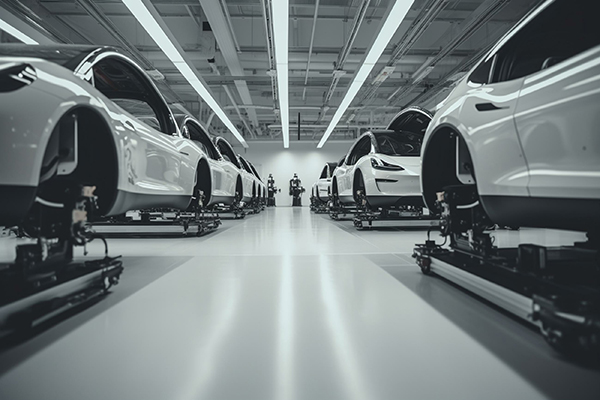
The squeeze is now reaching the factory floor, although the causes are tangled. Volkswagen is weighing up to 100,000 job cuts and the closure of four plants in what would be the biggest restructuring in its history, with the supervisory board set to discuss the overhaul on July 9, according to a Reuters report cited by Australia’s Nine News. Volkswagen has not blamed climate rules directly; most reporting points to Chinese electric-vehicle competition, U.S. tariffs and slack demand as the main drivers, with high German energy and regulatory costs adding to the pressure. Even so, the timing has sharpened the political backlash.
A rulebook that rewards the companies that waited
The retreat has produced an odd result: firms that moved early now look worse off. Companies that poured billions into electrification are watching rivals benefit from softened rules, and governments that banked on carbon revenue face budget uncertainty. In December, the Commission eased its planned 2035 ban on new combustion-engine cars — a concession to Germany, Italy and several Eastern European governments worried about auto-sector layoffs.
Into that mood stepped Manfred Weber. The European People’s Party president told Euronews the EU cannot “kill its industry due to climate change,” arguing that climate policy must be “reasonable from a business perspective.” His party, the largest force in the European Parliament, has already rolled back parts of the Green Deal in the name of competitiveness.
Lantos frames the deeper problem in blunt terms. The EU accounts for less than 7 percent of global emissions, he notes, yet its rules assume that acting alone will move the planet, even as major emitters at recent COP talks show little urgency to follow. By his math, cutting emissions 90 percent by 2040 would demand a pace more than three times what the bloc has managed since 1990.
A warning American policymakers should heed
The lesson for readers on this side of the Atlantic is hard to miss. When governments try to plan an entire economy around a distant climate target, ordinary families — not the officials who wrote the rules — absorb the cost in lost jobs and higher energy bills. Europe is discovering that a green transition imposed faster than its economy can bear doesn’t yield a cleaner future so much as a poorer, more dependent one. For the workers facing layoffs at Volkswagen and beyond, that reckoning may already be here.
Sources for this article include:
Submit a correction >>
Tagged Under:
big government, carbon tax, Climate, climate change, Collapse, debt bomb, debt collapse, Emissions, EU, Europse, green deal, green tyranny, market crash, new energy report, pensions, risk, Volkswagen
This article may contain statements that reflect the opinion of the author
RECENT NEWS & ARTICLES