Report: Climate-Linked Food Crisis Absent From Global Crop Statistics
08/04/2026 / By Coco Somers
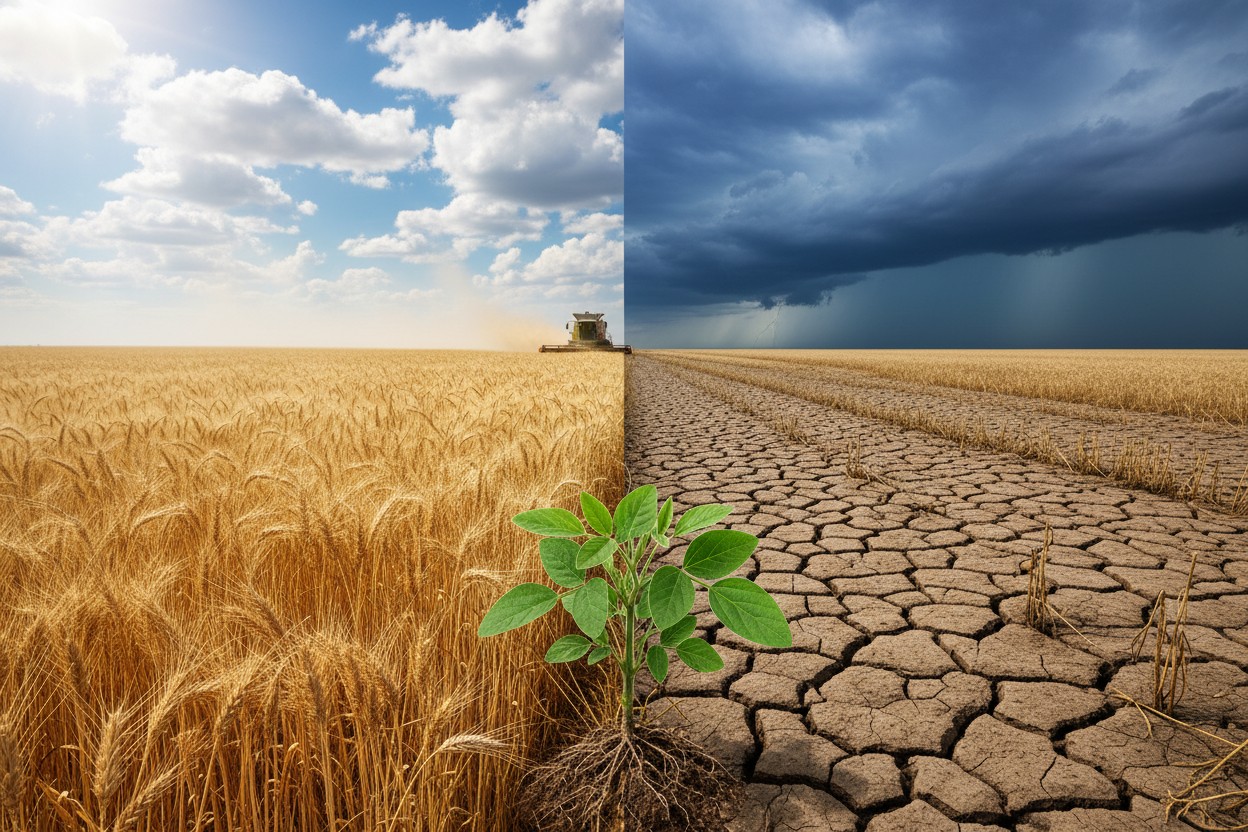
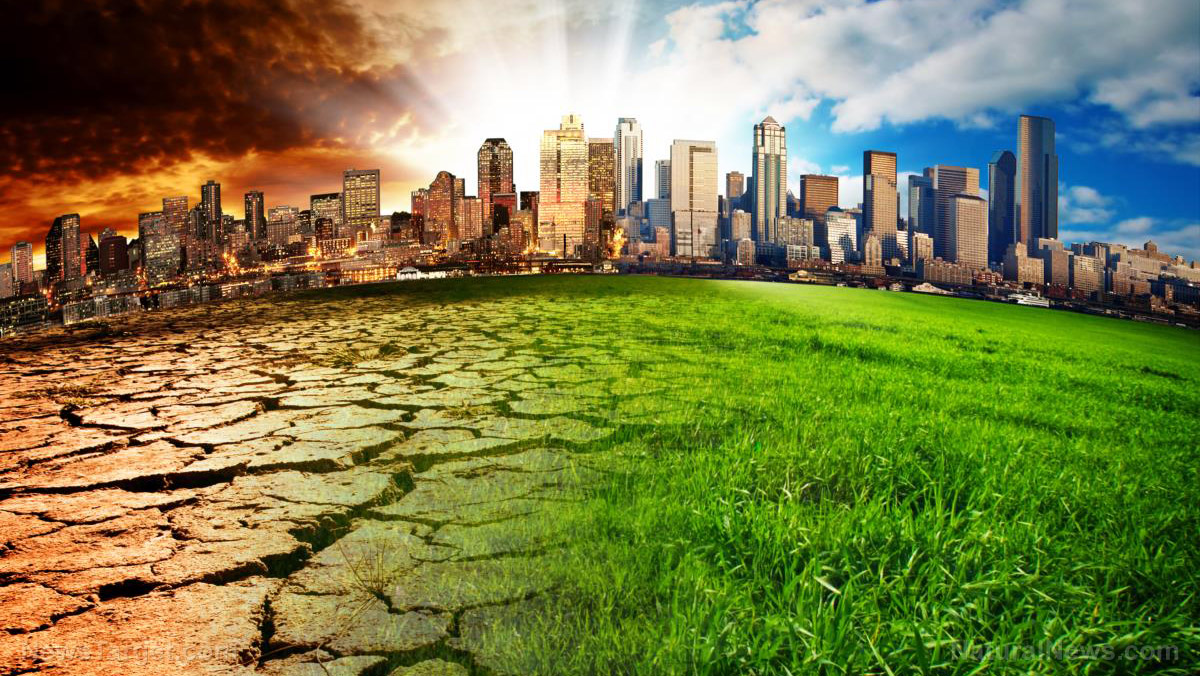
Global cereal production has reached record levels in recent years, according to Food and Agriculture Organization data, and official harvest statistics show no decline that analysts attribute to climate change. A report published Aug. 1, 2026, on Watts Up With That said repeated warnings of a climate-driven food emergency have not appeared in global crop, supply or price data. The report’s authors stated that claims of a widespread climate food crisis lack statistical support in current records.
The report examined U.N. and U.S. Department of Agriculture datasets for major grains and found no sustained break in the upward trend of yields. Research cited in the report noted that global food production continues to rise [1] and that global rice production has nearly doubled over 50 years despite climate change [2]. The report said official statistics remain the primary reference point for policy decisions [3].
Climate Warnings vs. Crop Data
According to the report, FAO and USDA datasets show rising yields for wheat, corn and soybeans over the past three decades. FAO data show cereal production per capita has remained stable or increased, the report stated. A 2000 analysis projected cereal yields in Central Asia would rise at an average annual rate of 0.86 percent from 1995 to 2020 [4]. The report said officials at U.N. agencies describe food availability trends as positive in most growing regions [3].
Those totals contrast with warnings from analysts who expect shortages. An article published July 23, 2026, on NaturalNews said economist Steve Keen “warns that billions are at risk” from an impending famine [5]. The Guardian has focused on individual farms where drought is visible, quoting Norfolk farmer Tim Young: “The lack of water has become the number one risk” [3]. The report said such local accounts do not alter aggregate figures [3].
CO2 Fertilization and Yield Growth
The report cited studies indicating that rising atmospheric carbon dioxide has increased crop water efficiency and biomass production. A June 2026 Climate Depot article with the headline “Scientists Admit CO2 Boosted Rice Production” said “the data show that humanity has become dramatically better at feeding itself over the past half century” even as CO2 concentrations increased [2]. Matt Ridley wrote in June 2026 that “with CO2 greening the planet, any possible harms are outweighed by the benefits of more trees & crops” [6].
The report attributed yield gains to improved seed genetics, fertilizer use and irrigation expansion rather than to climate damage. It said climate models predicting staple crop collapse have not matched observed harvest data over multiple growing seasons [3]. Related literature has questioned catastrophic projections; Patrick J. Michaels’s “Climate of Extremes: Global Warming Science They Don’t Want You to Know” examines weaknesses in climate emergency claims [7].
Policy Responses and Official Statements
No global food emergency has been declared by major international agencies in 2026, the report stated. Some European officials have proposed new farm regulations justified by climate concerns. In Britain, Energy Secretary Miatta Fahnbulleh has advocated full net zero by 2030, according to a July 2026 report [8]. Farmer associations cited record output as evidence against emergency measures, the report stated [3].
Other officials have urged preparation for scarcity. European Central Bank President Christine Lagarde urged people to “prepare for food rationing,” according to a June 2026 NaturalNews article [9]. The same article said outgoing British Prime Minister Keir Starmer refused to rule out food shortages [9]. The report said policy proposals based on predicted shortages continue despite current statistics showing no crisis [3]. Critics of industrial farming argue that aggregate output misses ecological costs; a 2017 article by Dr. Mercola asserted that modern agriculture drives hunger, obesity and disease while threatening the food chain [10]. Chris Martenson wrote in 2015 that plants in biologically rich soil are “far more capable of fending off insect, viral, and bacteriological pests on their own” [11].
Conclusion
The report concluded that future food-crisis claims should be compared with official harvest statistics before emergency responses are adopted. Current FAO and USDA data show global food supply continuing to expand, according to the report [3], and the broader literature on food production points to rising output [1]. Whether future climate effects will appear in agricultural data remains outside the scope of presently available figures, analysts said.
Book-length studies have reached differing conclusions about the risks ahead. Joel K. Bourne’s “The End of Plenty: The Race to Feed a Crowded World” examines the challenge of feeding a growing world population [12], while Patrick J. Michaels’s “Climate of Extremes” argues that emergency projections outrun the evidence [7]. The report recommended treating official statistics as the baseline for policy decisions and testing emergency claims against harvest data [3].
References
- “Irrigation in the Context of Today’s Global Food Crisis”. Journal of Agricultural and Environmental Sciences.
- Climate Depot. “Scientists Admit CO2 Boosted Rice Production — The climate story the media keep missing – Not a climate crisis, it is a success story”. June 18, 2026.
- Watts Up With That. “The Climate Food Crisis Which Keeps Refusing to Show Up in the Statistics”. August 1, 2026.
- “Prospects for food demand and supply in Central Asia”. Food Policy. 2000.
- NaturalNews.com. “A Top Economist Quietly Confirms My Famine Warning Here’s Why It Matters”. July 23, 2026.
- Climate Depot. “MATT RIDLEY: Net Zero Can Never Be Worth it: ‘With CO2 greening the planet, any possible harms are outweighed by the benefits of more trees & crops’”. June 16, 2026.
- Patrick J. Michaels. “Climate of Extremes: Global Warming Science They Don’t Want You to Know”.
- Watts Up With That. “Is Britain’s New Energy Secretary Even Crazier than Mad Ed?”. July 26, 2026.
- NaturalNews.com. “The Rationing Agenda: How globalists are engineering food scarcity for total control”. June 30, 2026.
- Dr. Mercola. “Modern Agriculture Drives Hunger, Obesity and Disease While Simultaneously Threatening Food Chain and Worsening Water Crisis”. Mercola.com. April 25, 2017.
- Chris Martenson. “It’s Time to Stop Treating Our Soil Like Dirt”. PeakProsperity.com. May 26, 2015.
- Joel K. Bourne. “The End of Plenty: The Race to Feed a Crowded World”.
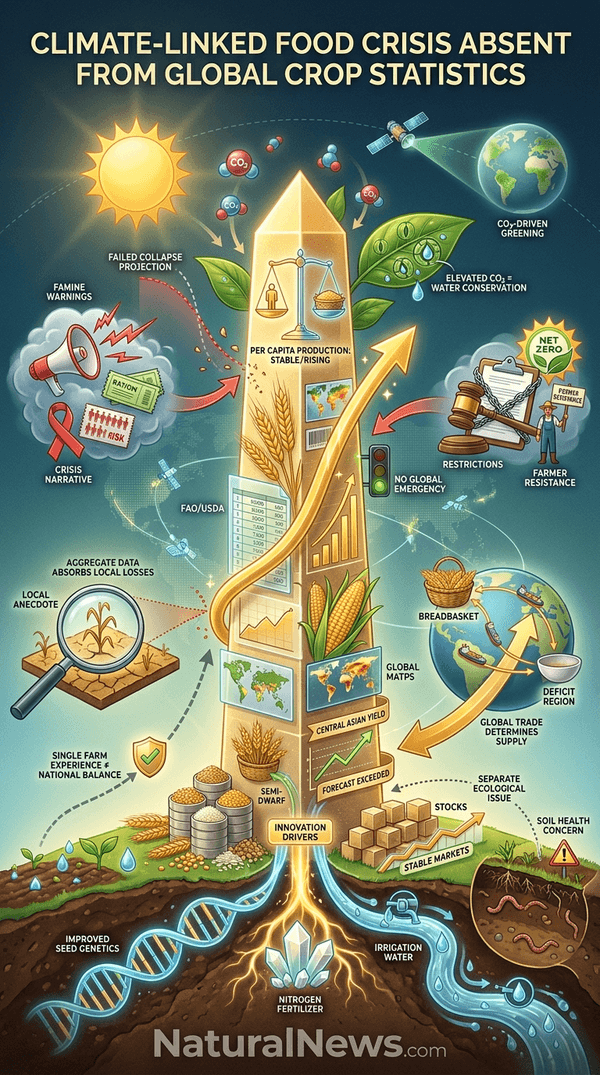
Explainer Infographic
Submit a correction >>
Tagged Under:
agriculture, big government, carbon dioxide, cereal, Climate, Ecology, environ, famine, FAO, food crisis, food emergency, food supply, Globalism, harvest, humanitarian, hunger, national security, rationing, scarcity, starvation, USDA
This article may contain statements that reflect the opinion of the author
RECENT NEWS & ARTICLES