China unveils world’s first methanol-powered “smart” oil supertanker, signaling major shift in green maritime tech
12/23/2025 / By Kevin Hughes
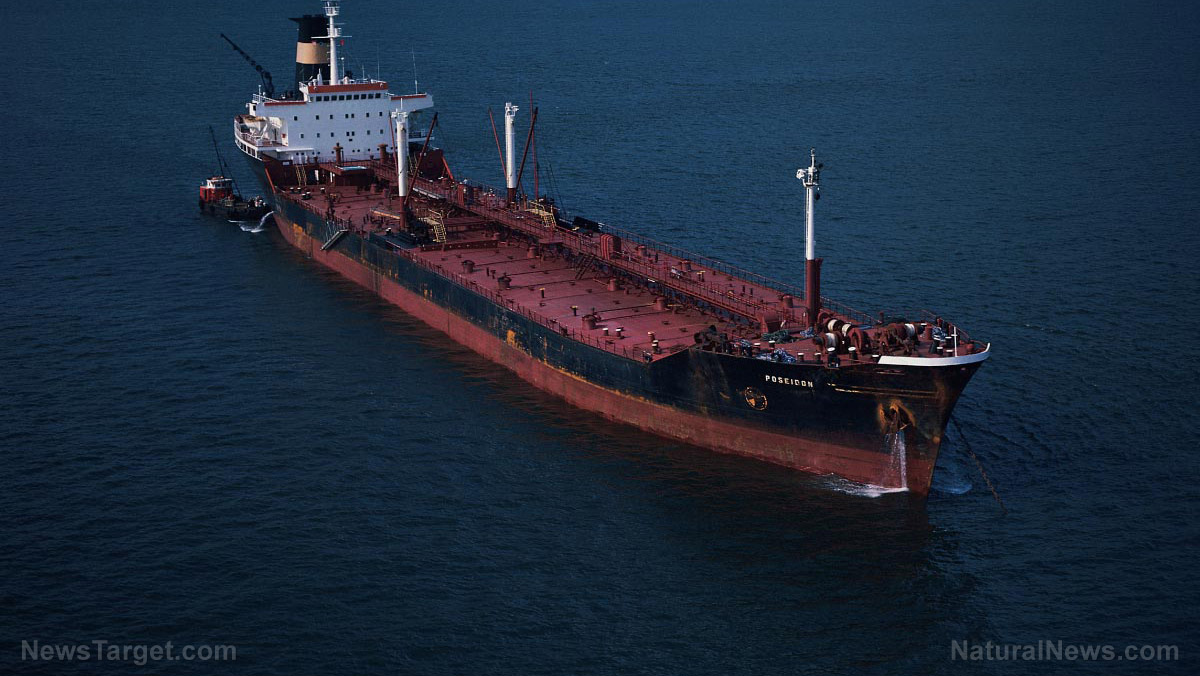
- China has launched the Kai Tuo, the first methanol-fueled intelligent ultra-large crude oil tanker, built by Dalian Shipbuilding Industry Co. Ltd. (DSIC). It features dual-fuel propulsion (methanol and conventional fuel), cutting CO? emissions by 92% and sulfur oxides by 99%compared to traditional ships.
- Kai Tuo complies with IMO Tier III emission standards and uses green methanol, reducing emissions by 70%+ when running on renewable fuel. Equipped with AI-driven automation, including: intelligent ship platform (navigation, fuel efficiency, route planning); smart liquid cargo management (precise crude oil handling); AI-powered engine room (predictive maintenance, real-time diagnostics).
- It will operate on the Middle East-Far East route, securing China’s oil imports while lowering environmental impact. Part of a larger fleet expansion, with 15 more tankers ordered, including five additional VLCCs (very large crude carriers).
- Unlike U.S./European nuclear-powered naval ships, China’s methanol-powered tanker offers a scalable, cleaner solution for commercial fleets. It positions China as a leader in green maritime tech, ahead of competitors still testing hydrogen/ammonia alternatives.
- It represents China’s push for carbon neutrality and maritime tech supremacy, and raises questions about whether this will accelerate global adoption of methanol ships or intensify tech rivalry with the West.
In a landmark achievement for the global shipping industry, China has commissioned the world’s first methanol-powered intelligent ultra-large crude oil tanker, marking a significant leap in sustainable maritime technology.
The vessel, named Kai Tuo [Kaituo, Kaito, Kaitu], was officially delivered by state-owned Dalian Shipbuilding Industry Co. Ltd. (DSIC) on Monday, Dec. 22, and is set to revolutionize long-haul oil transport with its dual-fuel propulsion system and advanced automation features.
“The Kaituo vessel has been successfully delivered to Dalian. This is the world’s first ultra—large intelligent oil tanker with a methanol dual-fuel propulsion system, independently designed and built by our country,” the Sohu news agency reported.
A technological and environmental breakthrough
The Kai Tuo measures an imposing 333 meters (1,092 feet) in length—comparable to some of the world’s largest supertankers—and boasts a carrying capacity of 2.1 million barrels of crude oil. What sets it apart, however, is its methanol dual-fuel engine, which slashes carbon dioxide emissions by 92% and sulfur oxides by 99% compared to conventional oil-powered ships.
China Central Television (CCTV) reported that the vessel complies with the International Maritime Organization’s (IMO) Tier III emission standards and is equipped with a sulfur scrubber and shaft generator for further efficiency gains. When running on “green methanol,” emissions are reduced by over 70%, aligning with Beijing’s broader push toward carbon neutrality.
BrightU.AI‘s Enoch explains that green methanol, also known as renewable methanol or bio-based methanol, is an eco-friendly alternative to conventional methanol, derived from fossil fuels. It is produced through the following processes: biological methanol production and chemical conversion.
Green methanol offers several advantages over conventional methanol such as significantly reducing lifecycle greenhouse gas emissions, contributing to climate change mitigation.
Smart systems enhance safety and efficiency
Beyond its green credentials, the Kai Tuo is a floating AI hub, integrating cutting-edge automation:
- Intelligent Ship Platform – Optimizes navigation, fuel consumption and route planning.
- Smart Liquid Cargo Management – Ensures precise handling and stability of crude oil loads.
- AI-Powered Engine Room – Performs predictive maintenance and real-time diagnostics to minimize downtime.
According to DSIC, the vessel’s development secured 71 patents, and its construction was completed four months ahead of schedule—a testament to China’s rapidly advancing shipbuilding prowess.
Strategic implications for global trade
The Kai Tuo is slated to ply the Middle East-Far East route, reinforcing China’s energy security while reducing the environmental footprint of its oil imports. This comes as Chinese refineries ramp up purchases of Russian Urals crude, signaling a strategic shift in global oil trade dynamics.
China Merchants Energy Shipping (CMES), the tanker’s operator, revealed that 15 additional tankers are on order, including five more VLCCs (Very Large Crude Carriers), with deliveries stretching into 2028. This expansion underscores China’s ambition to dominate green maritime logistics while reducing reliance on traditional fossil fuels.
A challenge to Western shipping dominance
While U.S. and European carriers still lead in nuclear-powered naval vessels, China’s methanol-powered supertanker represents a disruptive innovation in commercial shipping. Unlike American Nimitz-class carriers, which rely on nuclear propulsion, China’s new tanker leverages conventional yet cleaner methanol technology—a more scalable solution for civilian fleets.
Critics argue that methanol production still relies on fossil fuels in many cases, but proponents highlight its potential as a bridge fuel toward fully renewable alternatives. As the global shipping industry faces mounting pressure to decarbonize, China’s early adoption of methanol propulsion could position it as a market leader—ahead of competitors still experimenting with hydrogen and ammonia.
A new era in maritime transport
The Kai Tuo is more than just a ship—it’s a statement. By merging green energy, AI automation and industrial scale, China has set a new benchmark for sustainable shipping. Whether this spurs a wider industry shift or deepens geopolitical tensions over maritime tech supremacy remains to be seen.
Watch the video below about China’s massive cargo ship, the world’s largest, that carries 220,000 tons of cargo.
This video is from the Cynthia’s Pursuit of Truth channel on Brighteon.com.
Sources include:
Submit a correction >>
Tagged Under:
Beijing, carbon dioxide emissions, China, clean air, Climate, CMEs, commercial shipping, crude oil, Dalian, DSIC, dual-fuel engine, Ecology, environ, Far East, fossil fuels, future tech, glitch, green tyranny, IMO, Methanol, Middle East, nuclear propulsion, oil tanker, Russian Urals crude, shipping industry, supertankers, VLCCs
This article may contain statements that reflect the opinion of the author
RECENT NEWS & ARTICLES