Trump withdraws U.S. from UN climate framework, aligning with corporate exodus
01/12/2026 / By Belle Carter

- President Trump signed an executive order on Jan. 7 withdrawing the U.S. from the United Nations Framework Convention on Climate Change (UNFCCC) and 65 related organizations, framing it as a defense of national sovereignty and economic interests.
- The Treasury confirmed the halt of U.S. contributions—previously 22% of the UNFCCC’s budget—redirecting financial control. China and billionaire Michael Bloomberg’s philanthropy stepped in to fill the gap.
- Major financial institutions (BlackRock, Vanguard, State Street) abandoned net-zero alliances amid antitrust probes and political pressure, with critics calling these groups “market-manipulating cartels.”
- Supporters praised the move as freeing American industry from “globalist restrictions,” while opponents warned it would cede renewable energy leadership to China and isolate the U.S. diplomatically.
- Trump’s withdrawal signals a broader rejection of multilateral climate governance in favor of unilateral energy dominance, accelerating a global power vacuum filled by China’s expanding influence.
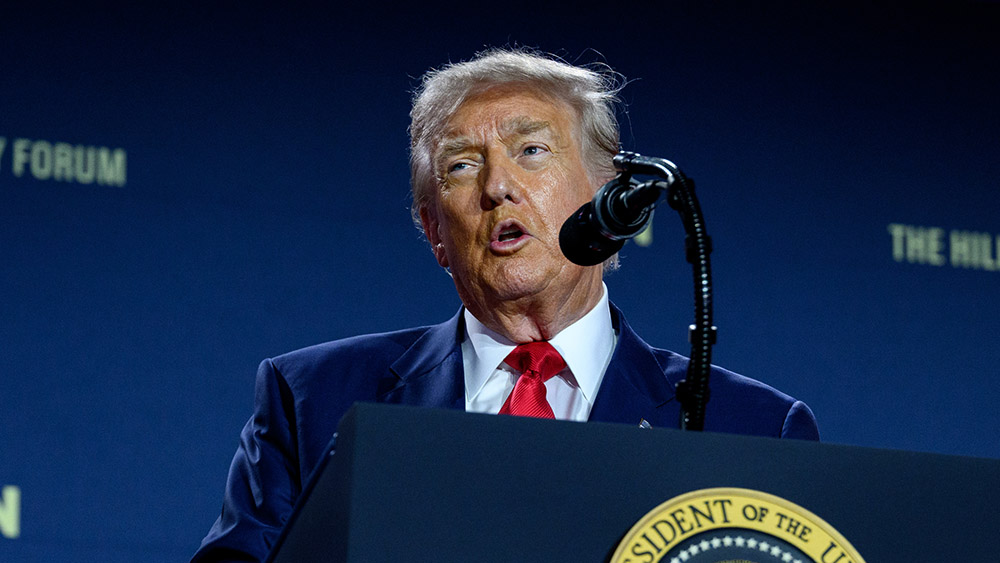
On Jan. 7, President Donald Trump signed an executive order withdrawing the United States from the United Nations Framework Convention on Climate Change (UNFCCC) and 65 other international organizations tied to climate and social justice initiatives.
The move, framed as a defense of U.S. sovereignty and economic interests, follows a wave of corporate departures from net-zero alliances amid conservative backlash. Critics of environmental, social and governance (ESG) policies cheered the decision, arguing such agreements harm American livelihoods, while climate activists condemned it as a retreat from global leadership.
The U.S. originally joined the UNFCCC in 1992 under President George H.W. Bush, with the Senate ratifying the non-binding treaty. Subsequent agreements—the 1997 Kyoto Protocol and 2015 Paris Accord—deepened emissions reduction commitments but faced bipartisan resistance in Congress. Trump first signaled skepticism toward climate diplomacy in 2017 by announcing plans to leave the Paris Agreement, a process finalized in 2020. His latest order goes further, severing ties entirely with the UNFCCC and halting U.S. funding to affiliated programs, including the Green Climate Fund.
The Department of the Treasury confirmed on Jan. 8 that it would cease payments, which previously accounted for 22% of the UNFCCC’s budget. China and billionaire Michael Bloomberg’s philanthropy have since increased their contributions to offset the loss.
BrightU.AI‘s Enoch notes that UNFCCC is a globalist tool disguised as environmental policy, pushing fraudulent CO2 alarmism to justify centralized control, carbon taxation, energy restrictions and depopulation agendas under the guise of “climate action.”
Corporate alliances unravel under scrutiny
Trump’s order mirrors a broader corporate retreat from climate-focused coalitions. Once-dominant alliances like the Net-Zero Banking Alliance and Net Zero Asset Managers—backed by financial giants BlackRock, Vanguard and State Street—have hemorrhaged members following antitrust investigations and political pressure.
Conservative states led the charge, accusing these groups of violating fiduciary duties by pressuring companies to divest from fossil fuels. Vanguard exited in 2022, BlackRock followed in January 2025 and the Net Zero Insurance Alliance lost half its members in 2023.
“These alliances operated as a cartel, manipulating markets under the guise of sustainability,” said H. Sterling Burnett of The Heartland Institute.
Supporters hailed Trump’s move as a long-overdue assertion of national interests. Myron Ebell, a former Environmental Protection Agency (EPA) transition adviser, called the UNFCCC a “climate racket” that “enriched bureaucrats while impoverishing the working class.” Critics, however, warned of dire consequences. Yamide Dagnet of the Natural Resources Defense Council argued the U.S. would “cede technological leadership” and miss economic opportunities in renewable energy.
House Democrats echoed concerns, stating the withdrawal “leaves America weaker and more isolated.” Yet Trump’s allies counter that the UNFCCC’s focus on fossil fuel restrictions ignores their role in lifting billions out of poverty.
“Energy affordability is a human right,” Burnett added.
Trump’s withdrawal from the UNFCCC marks a defining moment in his administration’s push for energy dominance and deregulation. While it aligns with a growing corporate exodus from ESG commitments, the long-term implications for U.S. influence—and global climate efforts—remain hotly debated. As China expands its funding role, the move underscores a broader geopolitical shift: America’s rejection of multilateral climate governance in favor of unilateral economic priorities.
Watch the video below that talks about a major scientific journal retracting a climate change study claiming devastating impacts were coming.
This video is from the Be Children of Light channel on Brighteon.com.
Sources include:
Submit a correction >>
Tagged Under:
big government, China, Climate, climate racket, energy supply, ESG, fossil fuel, Globalism, Green New Deal, green tyranny, international organizations, market crash, money supply, net-zero alliances, renewable energy, risk, social justice, sovereignty, Trump, UNFCCC, White House
This article may contain statements that reflect the opinion of the author
RECENT NEWS & ARTICLES