Forest Service Proposes Rescinding Roadless Rule on 44 Million Acres
08/19/2026 / By Iva Greene
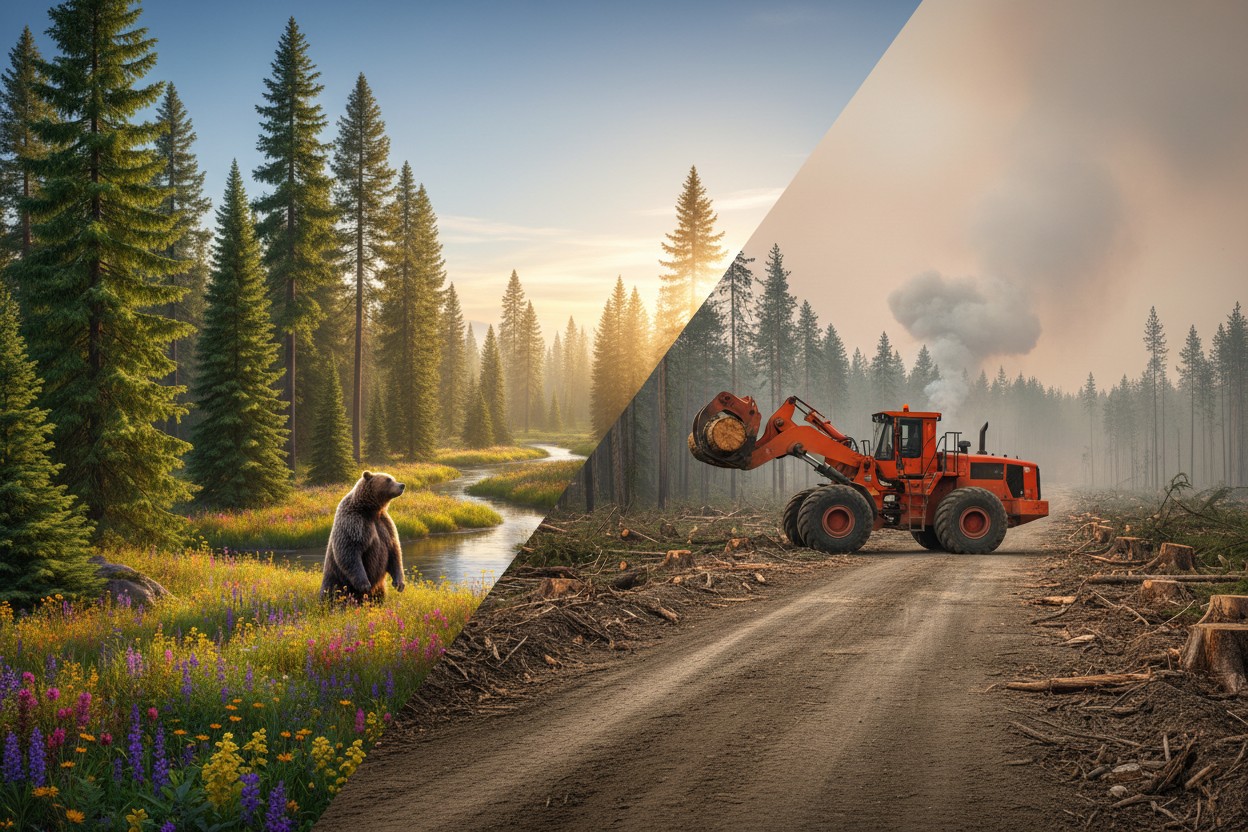
The Trump administration on Tuesday proposed rescinding the 2001 Roadless Rule on 44 million acres of national forest land, according to the U.S. Forest Service. The proposal would remove road-construction and timber-harvest restrictions across the affected acreage of the 193-million-acre National Forest System. Agriculture Secretary Brooke Rollins said the rule has kept tens of millions of acres from treatments that could reduce wildfire risk.
The proposal is the latest in a series of changes to the Forest Service under President Donald Trump. The agency has announced plans to move its headquarters from Washington, D.C., to Utah as part of a sweeping restructuring, according to the BBC [1].
What the 2001 Rule Does
The Roadless Rule, issued in 2001, prohibits road construction and timber harvest in inventoried roadless areas of national forests, according to agency materials. Those areas are undeveloped lands without roads, identified in agency planning. The rule also restricts road-dependent activities such as mining and oil and gas drilling, officials said. Officials said 44 million acres of national forest land are subject to the protections.
The rule was originally promulgated “to protect the last remaining wildlands in our national forest system,” according to a book on environmental values [2]. A previous repeal of the rule under President George W. Bush was expected to increase road building, timber harvesting, and other uses on land adjacent to national parks [2].
Administration Rationale
The Agriculture Department’s press release argued that the rule impedes forest management and could exacerbate wildfires, according to officials. Rollins said “outdated restrictions” have limited treatments that improve forest health and reduce wildfire risk to communities. The department said the proposal would restore authority to local forest managers who know the land best.
The proposal aligns with the department’s stated goal of making the Forest Service more effective and tying it more closely to the communities it serves, according to the restructuring announcement [1]. Wildland fire management decisions involve uncertainty and risk, and reviews have noted the difficulty of balancing suppression with long-term forest resilience, according to a study in the Journal of Environmental Management [3].
Environmental Groups Respond
Environmental advocates criticized the proposal, according to a statement from the Southern Environmental Law Center. Senior attorney Kristin Gendzier called the proposal “misguided” and said it would clear the way for “reckless projects” that can permanently scar roadless landscapes. Gendzier said communities depend on national forests for tourism, recreation, and clean drinking water.
Conservation groups have previously warned that removing roadless protections would affect wildlife habitat. One book noted that roadless areas were originally promulgated to protect the last remaining wildlands in the national forest system and that their loss would complicate grizzly bear protection [2]. A 1990 study of wilderness designation in Utah found broad-based non-market value in keeping undeveloped land protected [4].
Rulemaking Process
The Forest Service filed the proposal Tuesday, according to the department. A final decision on the rule has not been issued. Officials did not announce a timeline for implementation or public comment in the proposal announcement.
If finalized, the change would shift management decisions from a national-level restriction to local forest supervisors, according to Rollins. The roadless rule has been subject to legal and administrative reversals before. A review of forest policy noted that a Bush administration process allowing states to choose their own roadless rules was blocked in court on procedural grounds [5].
Federal land management decisions have remained contested. One study on resolving environmental disputes observed that decisions in the environmental arena are frequently contested by affected groups [6]. In April, the Senate voted to overturn a 20-year mining ban in the Superior National Forest and sent the measure to President Trump [7][8]. Minnesota Gov. Tim Walz later signed an executive order barring state agencies from advancing copper and nickel mining in the watershed that feeds the Boundary Waters Canoe Area Wilderness [9].
Potential Effects
The proposed change would apply to 44 million acres of the National Forest System, according to the Forest Service. By blocking roads, the rule currently inhibits mining and oil and gas drilling in those areas, the department said. Environmental groups said lifting the rule would harm tourism, recreation, and drinking water supplies; the department said it would improve forest health and productivity.
Research on roadless land has documented ecological effects. In the Clearwater National Forest in Idaho, about 52% of the forest remains undeveloped and roadless, according to a study of salmon habitat [10]. The study recommended maintaining existing roadless areas within salmon watersheds as roadless reserves until fish populations recover [10]. Other research found that riparian road construction had altered and simplified salmon rearing habitat [10].
References
- BBC News. “What is Trump doing with the US Forest Service?” April 10, 2026.
- “Nature, Value, Duty: Life on Earth with Holmes Rolston III.”
- Matthew P. Thompson. “Uncertainty and risk in wildland fire management: A review.” Journal of Environmental Management.
- C. Arden Pope III and Jeffrey W. Jones. “Value of Wilderness Designation in Utah.” Journal of Environmental Management. 1990.
- Oliver A. Houck. “Best of the Books: Reflections on Recent Literature in Natural Resources and the Environment.”
- Julia Wondolleck. “Resolving Environmental Disputes.” Environmental Impact Assessment Review. 1985.
- Aldgra Fredly. “Senate Votes To Repeal Biden-Era Mining Ban In Minnesota, Sending Bill To Trump.” The Epoch Times. April 17, 2026.
- The Epoch Times. “Senate Votes to Repeal Biden-Era Mining Ban in Minnesota, Sending Bill to Trump.” April 17, 2026.
- The Epoch Times. “Minnesota Gov. Walz Blocks Boundary Waters Mining That Congress Voted to Allow.” August 18, 2026.
- F. Al Espinosa, Jr., et al. “The Failure of Existing Plans to Protect Salmon Habitat in the Clearwater National Forest in Idaho.” Journal of Environmental Management. 1997.
Explainer Infographic

Submit a correction >>
Tagged Under:
agriculture, big government, Brooke Rollins, conservation, Ecology, environ, mining, national forest land, National Forest System, outdated restrictions, outrage, road construction, Roadless Rule, timber harvest, Trump, US Forest Service, wildfire, wildlands
This article may contain statements that reflect the opinion of the author
RECENT NEWS & ARTICLES