Sunlight turns plastic waste into clean hydrogen fuel in new breakthrough
05/05/2026 / By Cassie B.
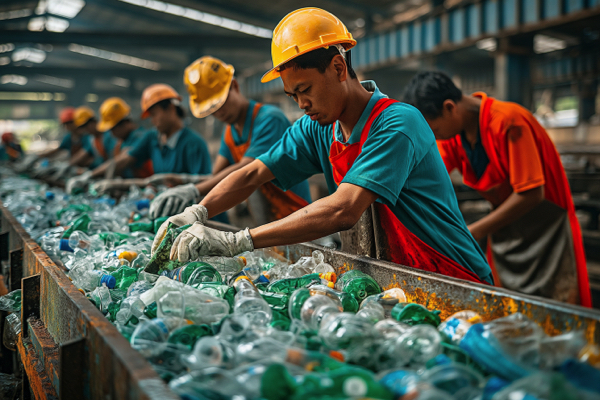
- Plastic waste is converted into clean hydrogen fuel using a sunlight-driven process with specialized light-sensitive materials.
- Researchers at the University of Adelaide developed the method, called solar-driven photoreforming, to break plastic into hydrogen and industrial chemicals.
- This approach addresses two crises simultaneously: plastic pollution and the need for fossil fuel alternatives.
- Early experiments achieved high hydrogen production rates and stable performance for over 100 continuous hours.
- Scaling up faces hurdles including plastic waste complexity, catalyst durability, and energy-intensive product separation.
On a planet drowning in more than 507 million tons of plastic each year, researchers at the University of Adelaide have announced a solar-powered method that turns discarded plastic into clean hydrogen fuel. Led by PhD candidate Xiao Lu, the team published findings in the journal Chem Catalysis showing that sunlight, when paired with specialized light-sensitive materials, can break plastic waste down into hydrogen, syngas, and other industrial chemicals. This discovery hits at the heart of two crises at once: the mountains of plastic choking ecosystems and the urgent need to ditch fossil fuels for something cleaner.
Plastic waste as a hidden energy resource
For decades, plastic has been treated as a disposal problem. Landfills swell. Oceans choke. Recycling rates hover around nine percent globally, according to earlier research. But plastics are built from long chains of carbon and hydrogen — the same building blocks found in fuels. The question has always been how to unlock that stored energy without burning the plastic and releasing toxic fumes into the air.
“Plastic is often seen as a major environmental problem, but it also represents a significant opportunity,” Ms. Lu said. “If we can efficiently convert waste plastics into clean fuels using sunlight, we can address pollution and energy challenges at the same time.”
That shift in thinking toward seeing waste as stored energy rather than worthless trash drives this entire line of research.
How sunlight converts plastic into fuel
The method carries a technical name: solar-driven photoreforming. When sunlight strikes the photocatalysts — specialized light-activated materials — it frees electrons that drive the conversion of water into hydrogen gas. The positive charges left behind go to work on the plastic itself, snapping apart long polymer chains into smaller chemical fragments.
Compared to traditional hydrogen production, which splits water using large amounts of electricity, this approach requires less energy. Plastics give up their electrons more readily than water does, so the reaction can proceed at lower temperatures with fewer harsh inputs.
Promising results from early studies
Professor Xiaoguang Duan, senior author from the School of Chemical Engineering at Adelaide University, reported that recent experiments have delivered strong numbers. Researchers have achieved high rates of hydrogen production along with acetic acid and even diesel-range hydrocarbons. Some systems have run continuously for more than 100 hours, showing improving stability and performance.
That durability matters. A catalyst that fades after a few hours cannot support real-world use. These early results suggest the chemistry can hold up under extended operation.
Challenges to scaling the technology
But moving from lab bench to factory floor will not happen overnight. The biggest obstacle is the messy reality of real plastic waste.
“One major hurdle is the complexity of plastic waste itself,” Prof. Duan said. “Different types of plastics behave differently during conversion, and additives such as dyes and stabilizers can interfere with the process. Efficient sorting and pre-treatment are therefore essential to maximise performance and product quality.”
A clear soda bottle breaks down differently than a black trash bag. Food residue can poison the catalyst. Dyes can block light from reaching the reactive particles. Without careful sorting, the process loses efficiency fast.
Engineering and efficiency hurdles
The catalysts themselves face durability problems. Current versions can degrade over time under harsh chemical conditions. That limits long-term reliability and raises questions about cost.
“There is still a gap between laboratory success and real-world application,” Prof. Duan said. “We need more robust catalysts and better system designs to ensure the technology is both efficient and economically viable at scale.”
Even after the reaction runs successfully, engineers must separate the resulting mixture of gases, liquids, and solids. That separation takes energy, and energy-intensive purification can reduce the net environmental benefit of the entire process.
A roadmap toward real-world use
Looking ahead, the team has outlined steps for scaling up. Their goals include improving energy efficiency, designing continuous-flow reactors that keep waste moving through light-filled zones, and combining solar power with thermal or electrical energy inputs for round-the-clock operation.
“This is an exciting and rapidly evolving field,” Ms. Lu said. “With continued innovation, we believe solar-powered plastic-to-fuel technologies could play a key role in building a sustainable, low-carbon future.”
The world currently generates roughly 507 million tons of plastic each year, with about 24 million tons escaping into the environment annually. Once loose, that plastic breaks into microplastics that work their way through soil and water systems, growing steadily harder to track or recover.
Redirecting even a portion of that waste into hydrogen fuel would serve two purposes at once: easing the disposal burden while generating a clean energy source that produces no emissions at the point of use. That dual benefit makes this technology worth watching.
This research stands out because it ties together goals that are usually addressed separately: managing difficult waste streams, running chemical reactions at lower temperatures, and producing fuels and industrial chemicals from materials that would otherwise be discarded. Reaching industrial scale will require proving the process works on messy, mixed real-world plastic, building catalysts that remain stable over long runs, and keeping purification efficient enough that the overall environmental gains stay intact.
For a world tired of hearing about problems without solutions, this research offers something different. It suggests that the plastic clogging our oceans might also hold the key to powering our future.
Sources for this article include:
Submit a correction >>
Tagged Under:
breakthrough, Ecology, energy, energy supply, environ, green energy, hydrogen fuel, invention, microplastics, plastic waste, recycling, scientific, sunlight
This article may contain statements that reflect the opinion of the author
RECENT NEWS & ARTICLES