Mars will need its own time zone as clocks tick faster than on Earth, scientists warn
12/03/2025 / By Cassie B.
- Scientists warn that clocks on Mars tick faster than on Earth due to weaker gravity.
- This time difference, despite being tiny daily, would cripple future navigation and communication systems.
- Mars’s erratic orbit causes daily fluctuations, requiring a dynamic time zone, not a fixed offset.
- This research is a critical step for transitioning from visiting Mars to potentially living there.
- Future Martian colonies will depend on this new timekeeping to function.
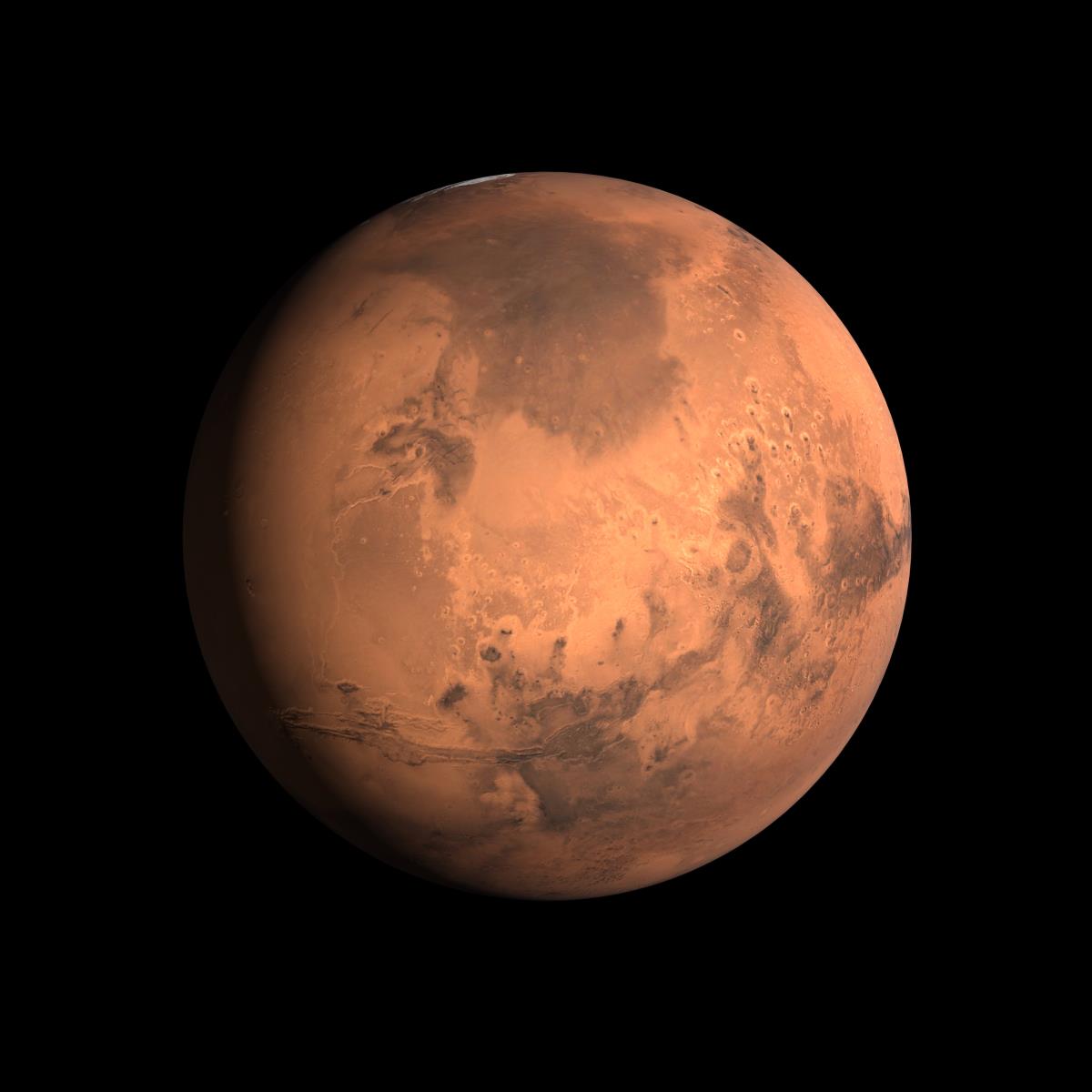
Forget setting your watch to Greenwich Mean Time or adjusting for daylight savings. If humanity is serious about planting its flag on the rust-colored soils of Mars, we will need to invent an entirely new time zone. Scientists now warn that the very fabric of time flows differently on the Red Planet, a direct consequence of Einstein’s laws of physics, and getting it wrong could sabotage future colonies.
The core issue is simple yet full of ramifications: clocks on Mars tick faster. According to physicists from the U.S. National Institute of Standards and Technology (NIST), time on Mars progresses an average of 477 microseconds quicker each day than on Earth. This is not a mechanical error but a fundamental truth of our universe, dictated by Einstein’s theory of general relativity.
The gravity of time
General relativity reveals that time is not a constant river but a malleable stream, bending and flowing at different rates based on gravity and motion. Strong gravity, like Earth’s, acts as a drag on time, slowing clocks. Weaker gravity, like the pull on Mars which is five times feebler than Earth’s, allows clocks to run faster. “Like current global navigation systems like GPS, these systems will depend on accurate clocks,” says NIST physicist Dr. Bijunath Patla.
Although 477 microseconds is a tiny sliver of time (it’s just one thousandth of a blink!), it accumulates relentlessly. Over a decade, Mars pulls 1.7 seconds ahead of Earth. Across centuries, that gap widens to minutes. For precision technology, this drift is catastrophic. Modern 5G networks on Earth, for example, require synchronization to within a tenth of a microsecond. Future Martian GPS and communication systems would fail without accounting for this relativistic head start.
A wobbly celestial clock
Complicating matters further, Mars’s timekeeping is not steadily fast; it is erratic. The planet’s orbit is an eccentric oval, not a neat circle, and it is constantly tugged by the gravitational forces of the sun, Earth, and even Jupiter. This causes daily variations in how fast time passes on Mars, with fluctuations reaching up to 226 microseconds per day. “A three-body problem is extremely complicated. Now we’re dealing with four: the sun, Earth, the moon and Mars,” Dr. Patla explains. “Its distance from the sun and its eccentric orbit make the variations in time larger.”
This means a future Martian time zone cannot simply be a fixed offset from Earth time. It must be a dynamic, living standard that accounts for the planet’s changing velocity and position in the solar system. Establishing this is not merely academic; it is a prerequisite for workable navigation for rovers and astronauts, and for seamless communication between planets.
The research, published in The Astronomical Journal, builds on previous work to define time on the moon, where clocks tick about 56 microseconds faster per day. The scientists sense a pivotal moment. “The time is just right for the Moon and Mars,” Patla said. “This is the closest we have been to realizing the science fiction vision of expanding across the solar system.”
The implications are profound. Every synchronized data packet, every landing coordinate, and every scheduled communication link for future missions will hinge on this understanding. It transforms Mars from a distant destination into a laboratory for testing Einstein’s theories under new, complex conditions.
Although the surface of Mars may not be bustling with activity until decades from now, the work to define its time starts today. It is a quiet but monumental step in moving from visitation to habitation. As we reach for the stars, we are learning that even something as seemingly simple as telling time requires us to fundamentally reorient our thinking to the strange, relativistic rules of the cosmos. Our future on another world will literally be governed by a different clock.
Sources for this article include:
Submit a correction >>
Tagged Under:
cool science, cosmos, discoveries, Earth, gravity, Mars, Space, time, time zone, weird science
This article may contain statements that reflect the opinion of the author